
Parents of Older Children
For many years, many Ponseti trained doctors were unsure about the effectiveness of the Ponseti Method for treatment of children 2 and older. However, recent research has shown that this method can be effective for children with neglected clubfoot and children who have had failed surgery. The oldest child successfully treated with the Ponseti method for failed surgery was 10 at the time of treatment. Ponseti trained doctors have now treated dozens of older children. Listed below are some modifications of the Ponseti method for older children as well as other information to be aware of.
If you have a child 2 years of age or older with neglected clubfoot or failed surgery, talk to your orthopedic surgeon about what might be different about the Ponseti Method treatment they may receive.
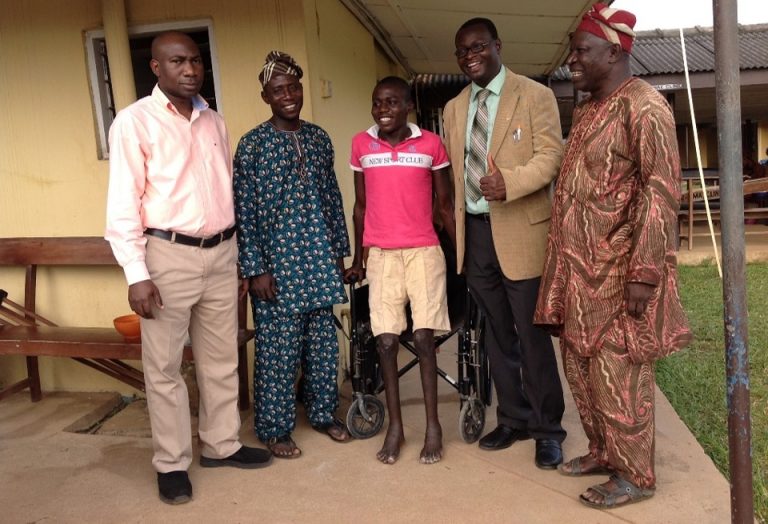
For many years, many Ponseti trained doctors were unsure about the effectiveness of the Ponseti Method for treatment of children 2 and older. However, recent research has shown that this method can be effective for children with neglected clubfoot and children who have had failed surgery. The oldest child successfully treated with the Ponseti method for failed surgery was 10 at the time of treatment. Ponseti trained doctors have now treated dozens of older children. Listed below are some modifications of the Ponseti method for older children as well as other information to be aware of.
If you have a child 2 years of age or older with neglected clubfoot or failed surgery, talk to your orthopedic surgeon about what might be different about the Ponseti Method treatment they may receive.
Important information to be aware of:
According to research done by several Ponseti trained physicians the average number of casts for older children is about 10. The doctor should also spend more time manipulating the foot during visits (about five to ten minutes) to allow for greater stretching of the soft tissue. Each cast needs to be worn for a longer period (about two weeks) than for younger children. Because there will be some side effects of long periods of casting, it is advisable to allow the child to walk on the cast and also in each visit to the clinic after the cast is removed. This will reduce stiffness and muscle atrophy.
The doctor will also correct the foot to 30 to 40 degrees abduction (30 to 40 degrees away from the midline of the body) as opposed to 70 degrees for younger children. This does not limit the effectiveness of the Ponseti Method for treatment of older children.
After treatment, all children need to wear a brace to prevent relapses. A brace is kind of like a retainer for your foot; it keeps the foot from turning back inward. In general, it is used as in younger kids until the age of 4 years. After that age, some doctors will recommend a muscle transfer to balance the foot, therefore, allowing not using the brace.
Physical therapy is a very important tool used to help older children maintain correction as it helps improve muscle strength. Ask your doctor about where to find physical therapists in your area.
As always, please contact us with any questions at any time.
You're Not Alone
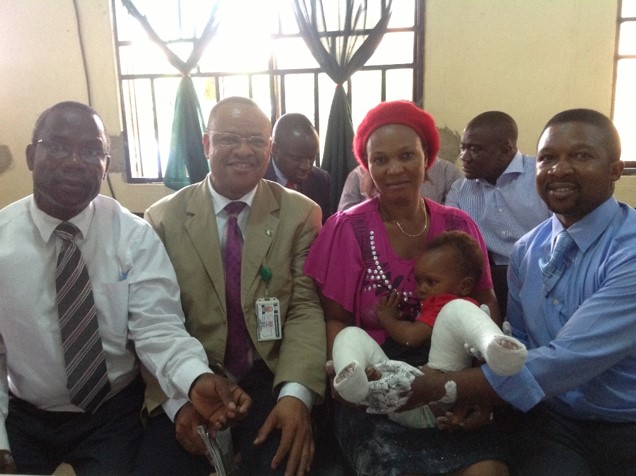
If you or your child has clubfoot, you are not alone. Worldwide, roughly 1.2 people per 1000 are born with clubfoot. This means that in the United States alone, 10 babies are born with clubfeet every day.
Causes:
If you are a parent, you may be feeling any combination of shock, denial, guilt, and fear. This is all very normal. Take a deep breath and realize that none of this is the fault of you or your partner. And of the multitude of birth defects that could happen to your baby, this one has hope! This one is completely treatable!
Treatment:
The Ponseti Method of treatment for clubfoot is minimally invasive and 95% effective. You can read details about the process on this website. As a quick overview, treatment involves the gentle manipulation of the child’s foot and the application of toe-to-groin plaster casts. In each session, the ligaments and tendons of the foot are gently stretched and then a cast is applied to keep the foot in its new corrected position. The sessions are repeated every 4-7 days, and gradually, the displaced bones and taut ligaments are brought back into alignment. Generally 5-6 sessions will be required to obtain a correction. Before applying the last plaster cast the heel cord is often clipped to complete the correction and by the time the cast is removed 2-3 weeks later, the tendon has regenerated to proper length and strength. In order to prevent relapse, the child will be fitted with a brace consisting of a bar with high top, open-toed shoes attached to it. The child will need to wear this brace full-time for the first 2-3 months and then when the child sleeps at night and nap time for ~4 years.
Another informative publication is Clubfoot: Ponseti Management (also known as the Red Ponseti Book) produced by Global-HELP Publications. This is a shorter version of the above manual and it has translations in multiple languages. Visit www.global-help.org for ordering information.
Older Children:
If you are the parent of an older child, the Ponseti Method can still help. Click here for more information.
We can help!
Regardless of your situation, many resources exist to help patients and their parents. We hope the information provided on this website is of help to you. Don’t hesitate to contact us if you have any questions.
Clubfoot: Facts for Parents & Caregivers
Be honest and complete when you talk with the doctor.
Do not hold back information, even if it is embarrassing.
Enlist the help of a supporter.
Ask a family member or friend to be present when talking with the Doctor to help recall what was said, to take notes or to ask questions.
Speak up if you are confused about treatment or complications.
Call the nearest Ponseti Clinic or the National Secretariat for advice and/or clarification.
Don’t hesitate to ask questions when you don’t understand.
Be honest and complete when you talk with the doctor.
Do not hold back information, even if it is embarrassing.
Enlist the help of a supporter.
Ask a family member or friend to be present when talking with the Doctor to help recall what was said, to take notes or to ask questions.
Speak up if you are confused about treatment or complications.
Call the nearest Ponseti Clinic or the National Secretariat for advice and/or clarification.
Don’t hesitate to ask questions when you don’t understand.
Ask for Educational Materials.
Ask the doctor for brochures or instruction sheets that you and your family members can review at home or for an educational website.
Know the treatment plans.
Ask about the diagnosis, treatment alternatives, course of care and risks of treatment and possible complications.
Know your Clubfoot Guidelines.
Ask the doctor or nurse about the benefits, application of casts (POP) and complications of all treatments, and learn the name of the materials used.
Tell them if you have cast allergies or fears.
Avoid Clubfoot errors.
During a hospital stay, make your doctor aware of and any discomfort and request the necessary follow up.
Prevent incorrect manipulations.
Ask your doctor to assure patient safety and report any complications.
Be clear about follow-up care.
Ask about pain and pain relief, length of recovery time, physical limitations and if home assistance will be needed.
Prevent Relapse.
Ask your doctor about braces and how to use them.
Use braces as instructed by medical staff.